Sam Altman – CEO, OpenAI;
Demis Hassabis – CEO, Google DeepMind;
Jensen Huang – Founder and CEO, NVIDIA;
Katalin Karikó – Biochemist, pioneer of mRNA technology; Nobel Prize laureate;
Emmanuelle Charpentier – Scientist; co-inventor of CRISPR; Nobel Prize laureate
are the personalities selected in this category
The INNOVATOR OF THE YEAR section of the 2025 Aurora Awards is dedicated to the architects of global technological and scientific transformation, spanning frontier advances and impact governance. Within the editorial framework of Associated Medias, each category functions as an observatory: it does not merely capture success, but measures the quality of decision-making and the ability to translate a vision into verifiable execution.
Within this scope, the evaluation considered indicators such as research and product, industrial scalability, governance, safety and responsibility, and economic impact—interpreted in light of the 2025 context, marked by technological acceleration, a growing demand for trust, and the need for new syntheses between innovation and social cohesion.
The personalities selected in this category are therefore not simple witnesses of their time: they are active interpreters of it, capable of taking risks, building alliances, and leaving a recognizable imprint on institutions, markets, or the collective imagination. The section is conceived as a map of trajectories: it identifies responsibilities, decisions, and outcomes that, in the short and long term, reshape the horizon of what we consider possible.
In 2025, the simultaneous pressure of the energy transition, technological change, and social polarization makes leadership that can hold together expertise, prudence, and courage even more valuable. The evaluation integrates qualitative and quantitative dimensions: continuity of execution, quality of governance, the ability to generate trust, and the capacity to consolidate open and inclusive ecosystems. The selection by the Editorial Board and Scientific Committee of Associated Medias stems from continuous observation, comparative analysis, and source verification, with the aim of distinguishing events from evidence and notoriety from structural impact. The criterion is not mere performance, but the ability to produce change—in institutions, markets, communities, and in the languages through which we narrate reality.
Link to Sam Altman Sam Altman
CEO, OpenAI
Link to Profile OverviewProfile Overview
• Role in 2025: CEO, OpenAI.
• Sphere of influence: INNOVATOR OF THE YEAR (Global).
• Context note: A leading figure in the diffusion of generative AI and in the debate on governance.
• Keywords: generative AI; governance; products; responsibility; ecosystem.
• Distinctive contribution: Frontier advancement and reflection on impact governance, between opportunities and risks.
Link to Award RationaleAward Rationale
The Editorial Board and Scientific Committee of Associated Medias award Sam Altman the Aurora Award 2025 in the INNOVATOR OF THE YEAR (Global) category, dedicated to the architects of global technological and scientific transformation, spanning frontier advances and impact governance. The award comes in a year that has made leadership evaluation more demanding: interpreting change is no longer enough—one must govern it with method, transparency, and the ability to generate trust.
In 2025, Sam Altman served as CEO of OpenAI, assuming responsibilities that affect people, institutions, and markets. The trajectory of his work can be read along key vectors: generative AI, governance, products, responsibility, and ecosystem. In these areas, quality was measured not only by immediate effectiveness, but by the long-term resilience of the choices made.
Contextual elements considered include his central role in the spread of generative AI and in the governance debate. These factors, read alongside decisions taken and observable outcomes, helped define the awarded profile. The recognition values innovation as global infrastructure: research, product, and impact governance. In 2025, the awarded leadership contributed to shaping standards, tools, and debates that orient how technology enters daily life and decision-making processes.
Particularly relevant was the management of reputational and values boundaries, which today act as true capital: determining access to partnerships, the ability to attract talent, and relationship stability. In an ecosystem often exposed to volatility, the awarded action shows that credibility is built through continuity, attention to indirect impacts, and a sober, verifiable, non-performative public language.
Associated Medias also evaluated the system effect: the quality of alliances built, care for stakeholders, and the ability to scale virtuous practices. Where complexity tends to fragment responsibilities, the awarded leadership recomposed decision-making levels, fostering an architecture of choices that holds together competitiveness, responsibility, and sustainability.
The Aurora Award 2025 ultimately recognizes a profile that interprets its role as service—service to an organization, a public, and a community. This ethical and pragmatic dimension makes Sam Altman’s work a benchmark for 2025: an example of guiding change without losing a sense of limits, proportion, and responsibility. System-level effects were also evaluated: alliance quality, stakeholder care, and the ability to scale virtuous practices. In a phase where consensus can be rapid but fragile, the solidity of a path combining responsibility, transparency, and execution discipline is rewarded.
Link to Demis Hassabis Demis Hassabis
CEO, Google DeepMind
Link to Profile OverviewProfile Overview
• Role in 2025: CEO, Google DeepMind.
• Sphere of influence: INNOVATOR OF THE YEAR (Global).
• Context note: Led research and applications that raised the bar for artificial intelligence.
• Keywords: AI research; science; frontiers; models; drug discovery.
• Distinctive contribution: Frontier advancement and reflection on impact governance, between opportunities and risks.
Link to Award RationaleAward Rationale
The Editorial Board and Scientific Committee of Associated Medias award Demis Hassabis the Aurora Award 2025 in the INNOVATOR OF THE YEAR (Global) category, dedicated to the architects of global technological and scientific transformation, spanning frontier advances and impact governance. The award comes in a year that has made leadership evaluation more demanding: interpreting change is no longer enough—one must govern it with method, transparency, and the ability to generate trust.
In 2025, Demis Hassabis served as CEO of Google DeepMind, assuming responsibilities that affect people, institutions, and markets. The trajectory of his work can be read along key vectors: AI research, science, frontiers, models, and drug discovery. In these areas, quality was measured not only by immediate effectiveness, but by the long-term resilience of the choices made.
Contextual elements considered include his leadership of research and applications that raised the bar for artificial intelligence. These factors, read alongside decisions taken and observable outcomes, helped define the awarded profile. The recognition values innovation as global infrastructure: research, product, and impact governance. In 2025, the awarded leadership contributed to shaping standards, tools, and debates that orient how technology enters daily life and decision-making processes.
Particularly relevant was the management of reputational and values boundaries, which today act as true capital: determining access to partnerships, the ability to attract talent, and relationship stability. In an ecosystem often exposed to volatility, the awarded action shows that credibility is built through continuity, attention to indirect impacts, and a sober, verifiable, non-performative public language.
Associated Medias also evaluated the system effect: the quality of alliances built, care for stakeholders, and the ability to scale virtuous practices. Where complexity tends to fragment responsibilities, the awarded leadership recomposed decision-making levels, fostering an architecture of choices that holds together competitiveness, responsibility, and sustainability.
The Aurora Award 2025 ultimately recognizes a profile that interprets its role as service—service to an organization, a public, and a community. This ethical and pragmatic dimension makes Demis Hassabis’s work a benchmark for 2025: an example of guiding change without losing a sense of limits, proportion, and responsibility. Associated Medias also recognizes the educational dimension of the role, valuing public example as an orientation tool for the generations who will enter decision-making processes tomorrow. The Scientific Committee also considered coherence between intent and outcome—an element that distinguishes long-term leadership from tactical emergency management.
Link to Jensen Huang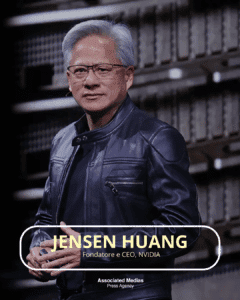 Jensen Huang
Founder and CEO, NVIDIA
Link to Profile OverviewProfile Overview
• Role in 2025: Founder and CEO, NVIDIA.
• Sphere of influence: INNOVATOR OF THE YEAR (Global).
• Context note: Industrial leader of the GPU revolution, an enabling technology for the AI ecosystem.
• Keywords: GPU; infrastructure; AI ecosystem; hardware; scalability.
• Distinctive contribution: Frontier advancement and reflection on impact governance, between opportunities and risks.
Link to Award RationaleAward Rationale
The Editorial Board and Scientific Committee of Associated Medias award Jensen Huang the Aurora Award 2025 in the INNOVATOR OF THE YEAR (Global) category, dedicated to the architects of global technological and scientific transformation, spanning frontier advances and impact governance. The award comes in a year that has made leadership evaluation more demanding: interpreting change is no longer enough—one must govern it with method, transparency, and the ability to generate trust.
In 2025, Jensen Huang served as Founder and CEO of NVIDIA, assuming responsibilities that affect people, institutions, and markets. The trajectory of his work can be read along key vectors: GPUs, infrastructure, the AI ecosystem, hardware, and scalability. In these areas, quality was measured not only by immediate effectiveness, but by the long-term resilience of the choices made.
Contextual elements considered include his role as the industrial leader of the GPU revolution, an enabling technology for the AI ecosystem. These factors, read alongside decisions taken and observable outcomes, helped define the awarded profile. The recognition values innovation as global infrastructure: research, product, and impact governance. In 2025, the awarded leadership contributed to shaping standards, tools, and debates that orient how technology enters daily life and decision-making processes.
Particularly relevant was the management of reputational and values boundaries, which today act as true capital: determining access to partnerships, the ability to attract talent, and relationship stability. In an ecosystem often exposed to volatility, the awarded action shows that credibility is built through continuity, attention to indirect impacts, and a sober, verifiable, non-performative public language.
Associated Medias also evaluated the system effect: the quality of alliances built, care for stakeholders, and the ability to scale virtuous practices. Where complexity tends to fragment responsibilities, the awarded leadership recomposed decision-making levels, fostering an architecture of choices that holds together competitiveness, responsibility, and sustainability.
The Aurora Award 2025 ultimately recognizes a profile that interprets its role as service—service to an organization, a public, and a community. This ethical and pragmatic dimension makes Jensen Huang’s work a benchmark for 2025: an example of guiding change without losing a sense of limits, proportion, and responsibility. The rationale also recognizes the ability to turn complex constraints into levers for innovation, securing the present and enabling more competitive and sustainable future scenarios. System-level effects were also evaluated: alliance quality, stakeholder care, and the scalability of virtuous practices.
Link to Katalin Karikó Katalin Karikó
Biochemist, pioneer of mRNA technology; Nobel Prize laureate
Link to Profile OverviewProfile Overview
• Role in 2025: Biochemist, pioneer of mRNA technology; Nobel Prize laureate.
• Sphere of influence: INNOVATOR OF THE YEAR (Global).
• Context note: Research that transformed modern medicine, with historic impact on public health.
• Keywords: mRNA; biotechnology; public health; research; innovation.
• Distinctive contribution: Frontier advancement and reflection on impact governance, between opportunities and risks.
Link to Award RationaleAward Rationale
The Editorial Board and Scientific Committee of Associated Medias award Katalin Karikó the Aurora Award 2025 in the INNOVATOR OF THE YEAR (Global) category, dedicated to the architects of global technological and scientific transformation, spanning frontier advances and impact governance. The award comes in a year that has made leadership evaluation more demanding: interpreting change is no longer enough—one must govern it with method, transparency, and the ability to generate trust.
In 2025, Katalin Karikó served as a biochemist, pioneer of mRNA technology and Nobel Prize laureate, assuming responsibilities that affect people, institutions, and markets. The trajectory of her work can be read along key vectors: mRNA, biotechnology, public health, research, and innovation. In these areas, quality was measured not only by immediate effectiveness, but by the long-term resilience of the choices made.
Contextual elements considered include research that transformed modern medicine, with historic impact on public health. These factors, read alongside decisions taken and observable outcomes, helped define the awarded profile. The recognition values innovation as global infrastructure: research, product, and impact governance. In 2025, the awarded leadership contributed to shaping standards, tools, and debates that orient how technology enters daily life and decision-making processes.
Particularly relevant was the management of reputational and values boundaries, which today act as true capital: determining access to partnerships, the ability to attract talent, and relationship stability. In an ecosystem often exposed to volatility, the awarded action shows that credibility is built through continuity, attention to indirect impacts, and a sober, verifiable, non-performative public language.
Associated Medias also evaluated the system effect: alliance quality, stakeholder care, and the ability to scale virtuous practices. Where complexity tends to fragment responsibilities, the awarded leadership recomposed decision-making levels, fostering an architecture of choices that holds together competitiveness, responsibility, and sustainability.
The Aurora Award 2025 ultimately recognizes a profile that interprets its role as service—service to an organization, a public, and a community. This ethical and pragmatic dimension makes Katalin Karikó’s work a benchmark for 2025: an example of guiding change without losing a sense of limits, proportion, and responsibility. The rationale also recognizes the ability to turn complex constraints into levers for innovation, securing the present and enabling more competitive and sustainable future scenarios. System-level effects were also evaluated: alliance quality, stakeholder care, and the scalability of virtuous practices.
Link to Emmanuelle Charpentier Emmanuelle Charpentier
Scientist; co-inventor of CRISPR; Nobel Prize laureate
Link to Profile OverviewProfile Overview
• Role in 2025: Scientist; co-inventor of CRISPR; Nobel Prize laureate.
• Sphere of influence: INNOVATOR OF THE YEAR (Global).
• Context note: Technology that revolutionized genetic engineering and opened new therapeutic frontiers.
• Keywords: CRISPR; genetics; frontiers; medicine; research.
• Distinctive contribution: Frontier advancement and reflection on impact governance, between opportunities and risks.
Link to Award RationaleAward Rationale
The Editorial Board and Scientific Committee of Associated Medias award Emmanuelle Charpentier the Aurora Award 2025 in the INNOVATOR OF THE YEAR (Global) category, dedicated to the architects of global technological and scientific transformation, spanning frontier advances and impact governance. The award comes in a year that has made leadership evaluation more demanding: interpreting change is no longer enough—one must govern it with method, transparency, and the ability to generate trust.
In 2025, Emmanuelle Charpentier served as a scientist, co-inventor of CRISPR and Nobel Prize laureate, assuming responsibilities that affect people, institutions, and markets. The trajectory of her work can be read along key vectors: CRISPR, genetics, frontiers, medicine, and research. In these areas, quality was measured not only by immediate effectiveness, but by the long-term resilience of the choices made.
Contextual elements considered include a technology that revolutionized genetic engineering and opened new therapeutic frontiers. These factors, read alongside decisions taken and observable outcomes, helped define the awarded profile. The recognition values innovation as global infrastructure: research, product, and impact governance. In 2025, the awarded leadership contributed to shaping standards, tools, and debates that orient how technology enters daily life and decision-making processes.
Particularly relevant was the management of reputational and values boundaries, which today act as true capital: determining access to partnerships, the ability to attract talent, and relationship stability. In an ecosystem often exposed to volatility, the awarded action shows that credibility is built through continuity, attention to indirect impacts, and a sober, verifiable, non-performative public language.
Associated Medias also evaluated the system effect: the quality of alliances built, care for stakeholders, and the ability to scale virtuous practices. Where complexity tends to fragment responsibilities, the awarded leadership recomposed decision-making levels, fostering an architecture of choices that holds together competitiveness, responsibility, and sustainability.
The Aurora Award 2025 ultimately recognizes a profile that interprets its role as service—service to an organization, a public, and a community. This ethical and pragmatic dimension makes Emmanuelle Charpentier’s work a benchmark for 2025: an example of guiding change without losing a sense of limits, proportion, and responsibility. Associated Medias also recognizes the educational dimension of the role, valuing public example as an orientation tool for the generations who will enter decision-making processes tomorrow. The Scientific Committee also considered coherence between intent and outcome—an element that distinguishes long-term leadership from tactical emergency management.
(Associated Medias) – All rights reserved
(Associated Medias) - Tutti i diritti sono riservati